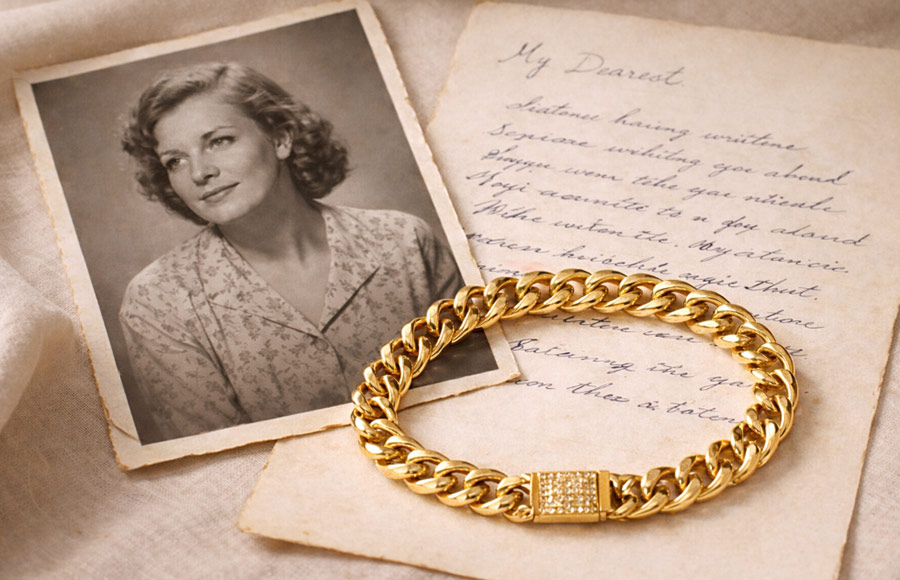
Why Gold Jewelry Matters
1. Gold Is Forever
Flowers fade. Chocolates disappear.
Real gold endures.
Give someone a piece of real karat gold and it doesn’t vanish in a week—it becomes part of her life. She wears it hundreds of times. Decades later, it’s still there. Fifty years on, that same piece may be worn by a daughter or granddaughter.
Gold is chosen when someone wants a moment to be remembered—not just acknowledged. When gold jewelry is made well, it doesn’t belong to a moment. It belongs to generations.

2. Gold Is Rare—More Rare Than Most People Realize
In the last 10,000 years, all of humanity’s gold—every coin, ring, necklace, crown, and bar ever made, all the gold mined and found—would fit into a single cube measuring 72 feet by 72 feet by 72 feet.
That’s it.
The size of one small building. One finite treasure.
Almost all of that gold is still with us today. Gold doesn’t decay, rust, or fade away. Every piece of gold jewelry ever made is part of that cube. When you own gold jewelry, you own a literal piece of Earth’s rarest material—your share of something humanity has spent millennia searching for.

3. Half of All Gold Ever Found Is Jewelry
Humanity didn’t turn gold into jewelry by accident. Jewelry is where gold stops being an idea and becomes someone’s story.
Gold is warm. It glows. It doesn’t tarnish. It’s gentle enough to wear against the skin and strong enough to last hundreds of years. That’s why half of all gold ever discovered exists today as rings, bracelets, necklaces, and earrings.
A coin can be stored. A bar can be locked away. But jewelry is lived with. It absorbs memory, meaning, and sentiment. Over time, the emotional value of jewelry often surpasses the value of the metal itself.
4. Gold Marks Human History
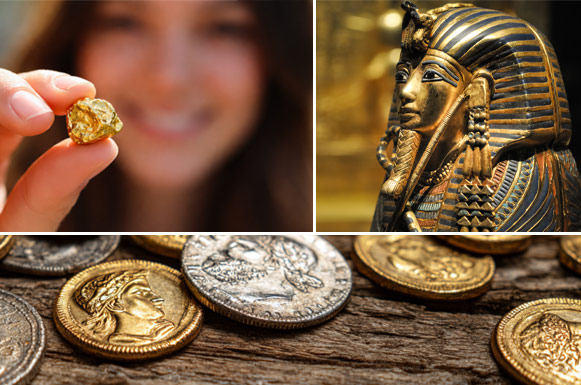
Gold jewelry made 1,000, 2,000, even 3,000 years ago comes out of the Earth looking exactly as it did when it was first created.
Iron corrodes. Wood decays. Ivory cracks.
Gold endures.
Because of its stability, gold has recorded human history more faithfully than almost any other material. Ancient coins still carry the faces, dates, and artistry of their era—unchanged. Gold is not just precious; it is a perfect marker of time.
When you wear gold, you wear something that connects your moment to every moment before it.
5. Jewelry Stays When Everything Else Changes
For over 100 years, we have made jewelry. For 75 of those years, we worked directly with the public at our showroom in Portland, Maine. Along the way, we learned something simple and profound:
Houses change.
Cars are replaced.
Furniture comes and goes.
Jewelry stays.
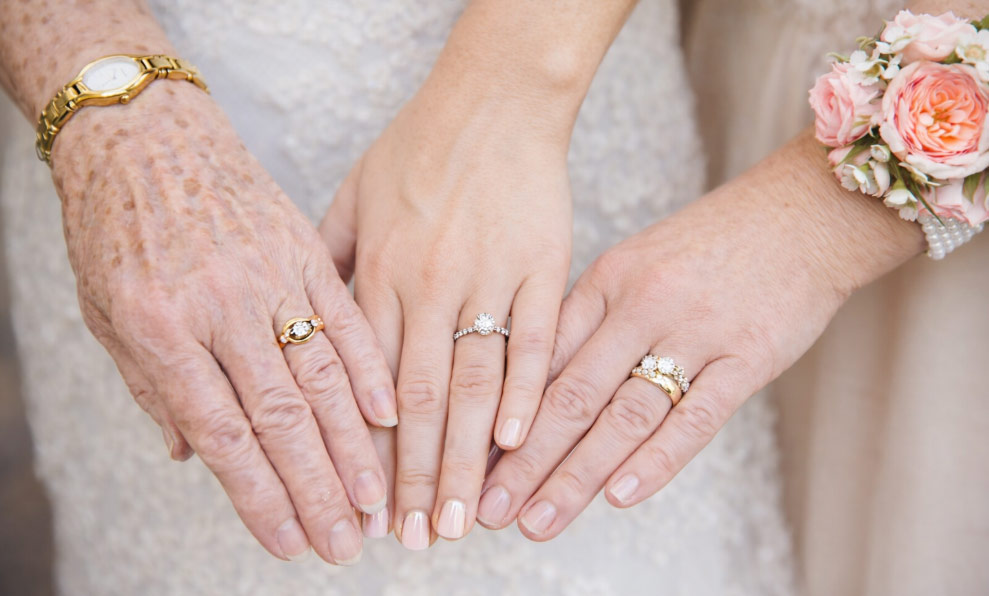
People grow deeply attached to certain pieces because jewelry lives closest to the body. It’s worn daily. It witnesses life. And when it’s made well, it lasts long enough to become part of a family’s story.
That’s why we’ve always designed jewelry to endure.
In recent years, gold has been rising. The world is reawakening to gold’s preciousness and rarity. Our approach to jewelry hasn’t changed. We have always used the full measure of gold, and we still do. We don’t skimp, because the purpose of fine jewelry isn’t only to look good today—it’s to last for decades, for generations, if worn with care.
When a piece is made properly from the beginning, it doesn’t just serve the first woman who wears it. Fifty years from now, it may be inherited by a granddaughter. And if it was made right, it will still work for her—and perhaps for her granddaughter as well.
6. Making Gold Jewelry Is Still Magic
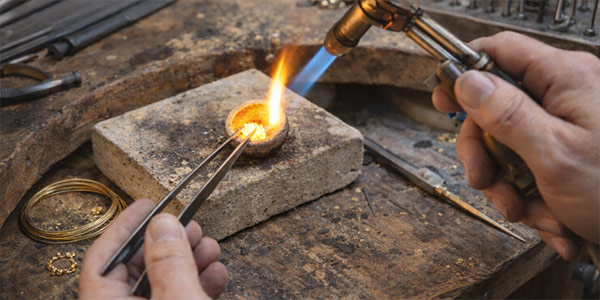
When I first worked full-time at Cross, one of my earliest jobs was casting gold.
We made sand molds. We melted gold with a torch. At nearly 2,000 degrees Fahrenheit, gold turns liquid and swirls like sunlight in a crucible. Pouring it, watching steam rise, breaking away the sand to reveal a finished piece—it felt like magic every time.
That sense of wonder never left me. Even today, gold still feels alive. It responds to heat, pressure, and the human hand. It rewards patience and respect. And when it’s finished properly, it becomes something meant to last far beyond us.

7. Your Piece of the Gold Story
If you own gold jewelry, you own part of that 72-foot cube. Your share of 10,000 years of searching.
Most people’s gold lives not in vaults, but on their hands, around their necks, at their wrists, near their hearts. That’s where gold belongs.
Gold glows when it touches skin. It carries weight, warmth, and presence. It doesn’t shout—but it is always noticed. And when it’s given in love, it becomes something more than metal. It becomes memory.
That is why gold jewelry has mattered for thousands of years.
And always will.
Just for Wonder
- Gold never rusts or tarnishes.
- Nearly all the gold ever mined is still with us today—recycled, reshaped, and worn again across centuries.
- One ounce can be stretched into a wire over 50 miles long.
- Gold can be flattened so thin that light can pass through it.
- Gold is one of the few metals safe enough to be eaten. Edible gold leaf has been used for over 1,000 years—not for flavor, but for celebration and meaning.
- Gold conducts electricity efficiently and never corrodes, which is why it’s trusted in spacecraft, satellites, and medical equipment—places where failure isn’t an option.
- Gold reflects infrared heat, which is why it’s used in astronaut helmet visors—to shield eyes from the sun.